

Best GRC Platforms for Reducing Breach Risk
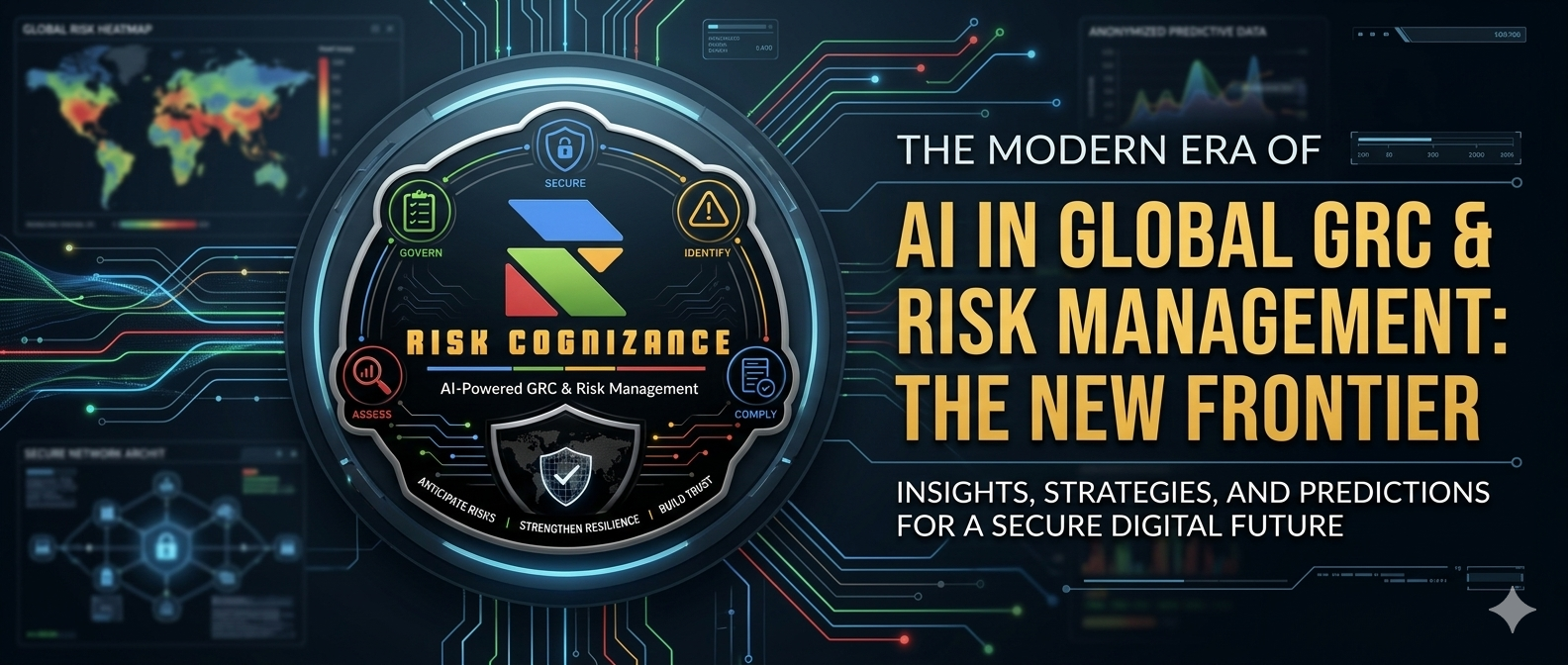
Best GRC Platforms for Reducing Breach Risk
Cybersecurity Risk Management • GRC Strategy
Why Risk Cognizance Is One of the Best GRC Platforms for Reducing Breach Risk
Compliance alone doesn't prevent breaches. The organizations that stay secure are those that identify, prioritize, and remediate risk before it becomes an incident — and that requires a fundamentally different kind of platform.
Risk Cognizance·Breach Prevention·8 min read
Organizations today face a growing convergence of cyber threats, regulatory requirements, and third-party exposure. Many respond by investing in compliance initiatives — audit readiness, evidence collection, framework certification. These efforts matter. But achieving compliance does not automatically protect an organization from a data breach.
Most breaches occur not because organizations failed an audit, but because they failed to identify, prioritize, and remediate risk before it became an incident. That gap — between compliance posture and actual security resilience — is precisely where Risk Cognizance operates.
Risk Cognizance is designed to go beyond compliance automation, providing a comprehensive Governance, Risk, and Compliance (GRC) platform that helps organizations proactively reduce cybersecurity risk, strengthen controls, and build enterprise-wide resilience.


The Problem with Traditional Compliance Platforms
Compliant but Still Vulnerable
Many compliance-focused solutions are built primarily to help organizations pass audits and collect evidence. While these capabilities are important, they frequently leave critical gaps in an organization's actual security posture.
Common gaps in compliance-first platforms
- Limited visibility into actual cyber risk beyond control status
- Lack of continuous monitoring between audit cycles
- Minimal third-party and supply chain risk management
- Weak executive and board-level risk reporting
- Reactive security posture rather than proactive risk reduction
- Siloed risk and compliance activities with no unified view
The result: organizations can maintain a green compliance dashboard while remaining genuinely vulnerable to cyberattacks. Passing a SOC 2 audit and surviving a sophisticated breach are not the same achievement.
"Most breaches occur because organizations fail to identify, prioritize, and remediate risk before it becomes an incident — not because they failed an audit."

How Risk Cognizance Reduces Breach Risk
Seven Capabilities That Move Beyond Compliance
01
Enterprise Risk Management (ERM)
Risk Cognizance provides a centralized ERM framework that enables organizations to identify, assess, prioritize, and manage risks across the entire enterprise — not just within the compliance boundary. Security, operational, compliance, and third-party risks are tracked within a single platform, giving leadership the unified context needed for informed, risk-based decisions.
02
AI-Powered Risk Assessments
Risk Cognizance leverages artificial intelligence to automate risk assessments, identify control gaps, and streamline compliance processes — allowing teams to focus on addressing real security risk rather than administrative overhead.
- Accelerate assessments across frameworks and business units
- Improve risk visibility with AI-generated findings
- Prioritize remediation efforts by business impact
- Reduce manual workloads on GRC and compliance teams
03
Continuous Control Monitoring
Cybersecurity controls cannot be evaluated once a year and expected to remain effective. Risk Cognizance continuously monitors security and compliance controls to identify deficiencies before they become exploitable vulnerabilities — shifting the organization from a point-in-time audit mindset to an always-on security posture.
- Early detection of control failures and drift
- Improved compliance posture year-round
- Faster remediation before threats can exploit gaps
- Reduced exposure across the control environment
04
Third-Party Risk Management (TPRM)
Many modern breaches originate through vendors, suppliers, or service providers. Risk Cognizance provides robust TPRM capabilities that give organizations active visibility into their extended risk perimeter — not just a static questionnaire on file.
- Assess and score vendor security posture
- Monitor third-party risk on an ongoing basis
- Track remediation efforts and treatment plans
- Maintain a centralized, auditable vendor inventory
- Reduce supply chain risk before incidents occur
05
Executive and Board-Level Risk Reporting
Reducing breach risk ultimately requires executive visibility and accountability. Risk Cognizance delivers real-time dashboards and risk reporting designed for the audiences that make capital allocation and risk appetite decisions — enabling leadership to prioritize investments based on actual threat exposure, not compliance status alone.
06
Integrated Compliance and Security Management
Risk Cognizance supports a broad range of leading frameworks, allowing organizations to map controls once and satisfy multiple requirements simultaneously — reducing duplication while strengthening overall security governance.
NIST CSF, NIST 800-53, CMMC, ISO 27001, HIPAA, PCI DSS, CIS Controls, SOC 2 and others
07
Human-in-the-Loop Risk Validation
Unlike fully automated systems that may generate excessive false positives, Risk Cognizance incorporates human oversight into the risk management process. Organizations benefit from AI-driven efficiency while maintaining the accountability and judgment that sound governance requires.
- Accurate risk identification with human review
- Better prioritization through expert validation
- Improved decision-making with full auditability
- Governance that holds up to board and regulatory scrutiny
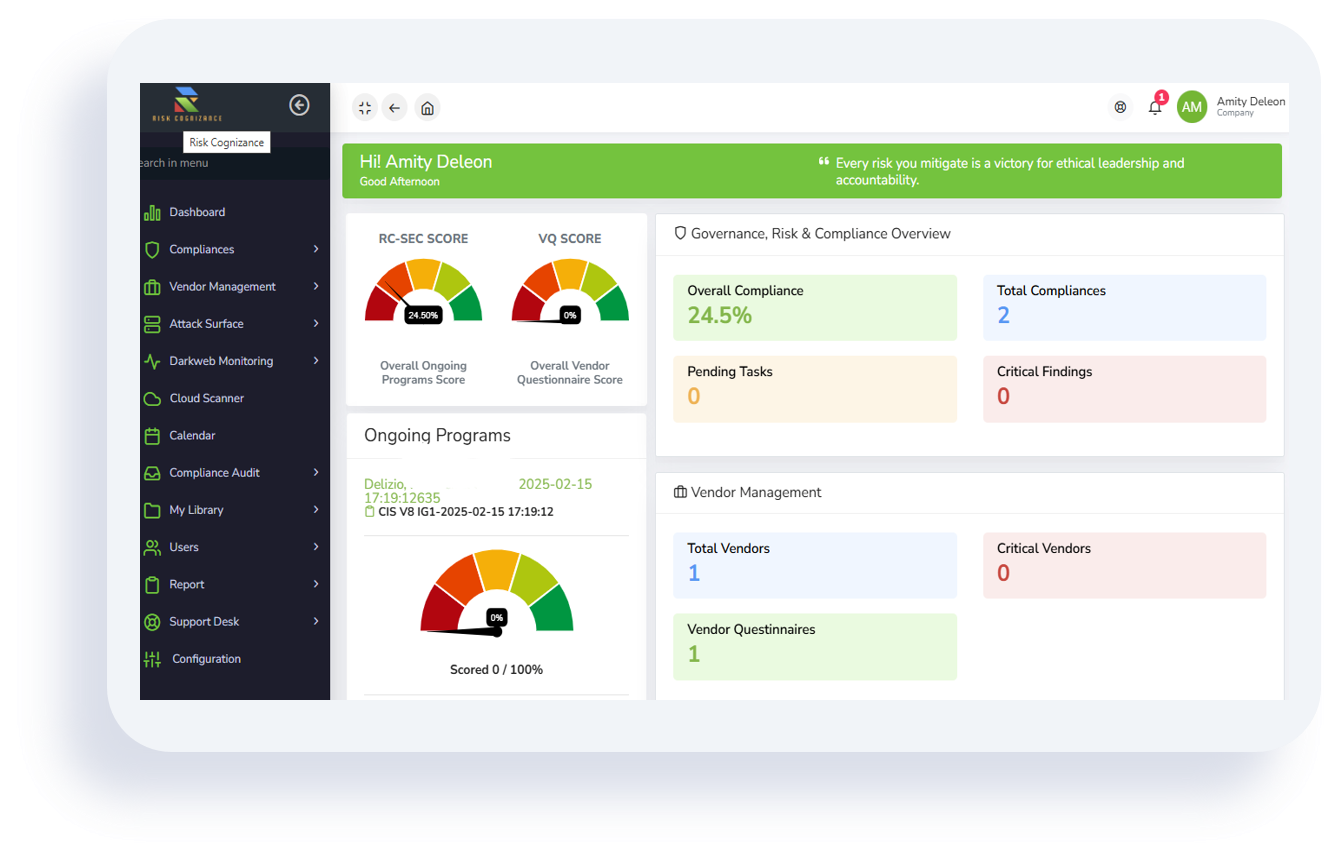
Building a Proactive Cybersecurity Program
From Reactive Compliance to Strategic Resilience
The most effective cybersecurity programs do not treat governance, risk management, compliance, and security operations as separate workstreams. They bring these functions together into a unified program with shared visibility, shared accountability, and shared data.
Foundation
Governance
Core discipline
Risk Management
Regulatory layer
Compliance
Operational
Continuous Monitoring
Extended perimeter
Vendor Risk Management
Strategic layer
Executive Oversight
Risk Cognizance brings all of these functions together within a unified platform, helping organizations move from reactive compliance activities to proactive risk reduction — and from audit readiness to genuine organizational resilience.
Why Organizations Choose Risk Cognizance
A Platform Built for Real-World Risk
- Enterprise Risk Management (ERM)
- Full GRC Platform
- Third-Party Risk Management (TPRM)
- AI-Powered Compliance Automation
- Continuous Control Monitoring
- Executive Risk Dashboards
- Multi-Framework Compliance Management
- Human-in-the-Loop Risk Validation
- Scalable Enterprise Architecture
- Improved Cybersecurity Resilience
Conclusion
Compliance Is the Floor. Resilience Is the Goal.
Reducing breach risk requires more than passing audits. It requires continuous visibility into risks across the organization and its vendor ecosystem, proactive management of security controls, strong governance structures, and executive accountability for risk decisions.
Risk Cognizance helps organizations achieve these objectives by combining enterprise risk management, compliance automation, continuous monitoring, and cybersecurity governance into a single integrated platform — transforming GRC from a defensive necessity into a strategic advantage.
For organizations seeking a comprehensive approach to reducing cyber risk while improving compliance and operational resilience, Risk Cognizance provides the tools, frameworks, and intelligence needed to build a stronger, more secure future.
"The question isn't whether your organization is compliant. It's whether your organization is resilient."
See Risk Cognizance in Action
Discover how a unified GRC and ERM platform moves your security program from audit readiness to genuine organizational resilience.
